
Behind the Cookbook: Baking Artisan Bread and Baking Artisan Pastries and Breads
Ciril Hitz is one of the leading figures in artisan bread. Fellow baker Peter Reinhart, himself the author of several important works on this subject—and who previously taught alongside Hitz at Johnson & Wales University—calls him “a master craftsman and a true artisan”.
Hitz’s two books, newly added to ckbk, draw on his decades of experience as a teacher of baking, and together deliver a grounding in the fundamental techniques and formulas needed to achieve success with every type of bread.
In this piece for our Behind the Cookbook series, the author describes how and why he wrote these books, and highlights a number of bread and pastry recipes that offer a good starting point for anyone looking to improve their bread baking skills.
By Ciril Hitz
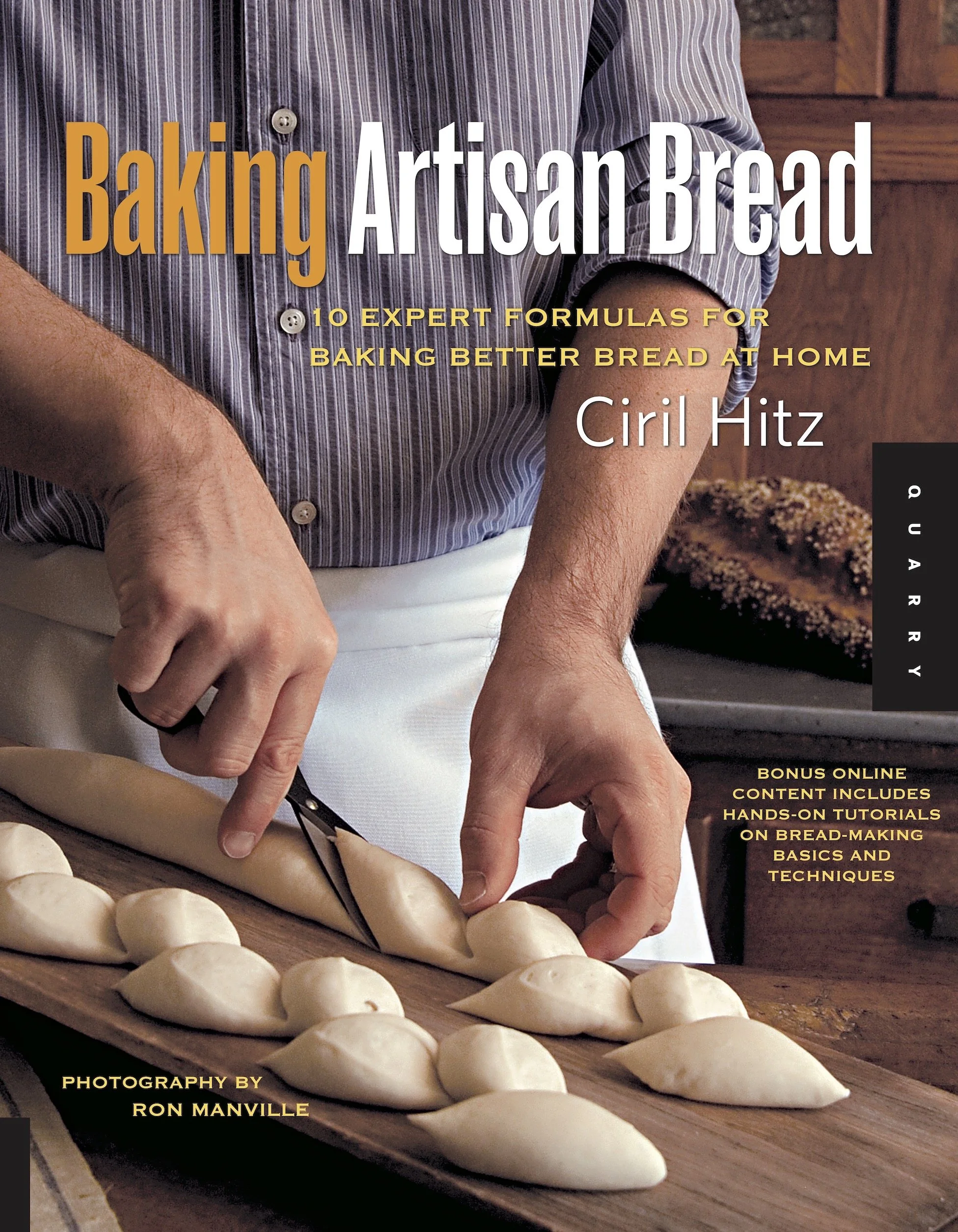
My book-writing journey began nearly twenty years ago, during a remarkable renaissance in the world of baking in the United States. Both professional bakers and home enthusiasts were becoming increasingly mindful of nutrition, ingredient quality, and the growing movement toward what people called “artisan baking.” There was a renewed appreciation for slow fermentation, handcrafted products, and the understanding that baking could be both deeply rooted in tradition and creatively expressive. I found myself in the middle of this exciting cultural shift and was fortunate enough to be given a platform to share my own philosophy and journey through my first book, Baking Artisan Breads: 10 Expert Formulas for Baking Better Bread at Home.
Drawing from my Swiss training and European roots, I developed a profound respect for the fundamentals of bread baking: quality flour, clean ingredients, proper fermentation, and patience. In Switzerland, bread was never viewed simply as food. It was a craft, a ritual, and a daily expression of care. Yet while I deeply valued tradition, I also wanted to challenge the idea that a dough needed to have only one identity.
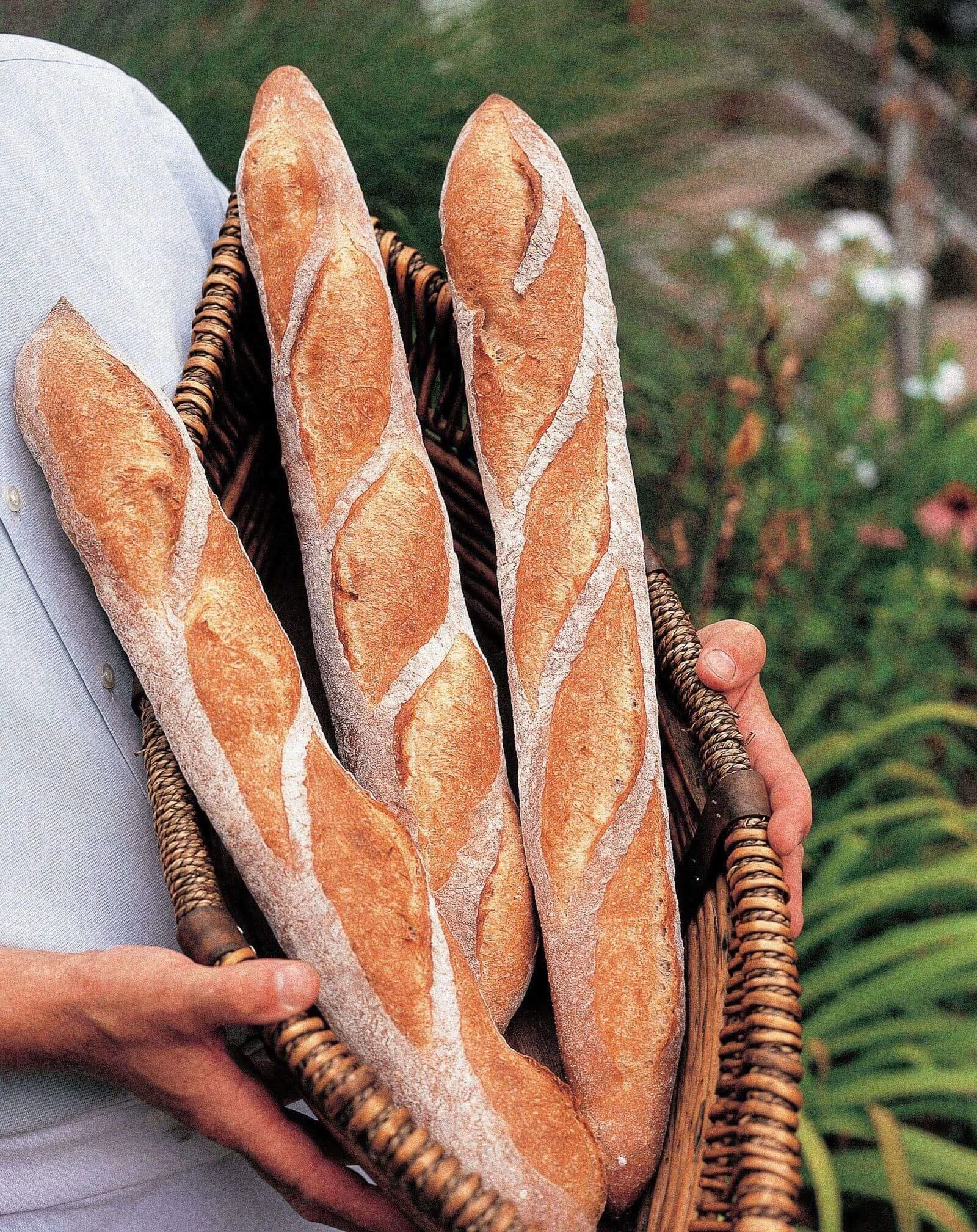
That curiosity became one of the central philosophies behind my first book. I wanted readers to understand that once you truly master a dough, the possibilities become endless. Why should a baguette dough only become baguettes? Why not reshape it, enrich it, alter the fermentation, or introduce new ingredients to create something entirely different? I wanted bakers to discover that learning one formula could open the door to several products with only subtle adjustments in process or presentation.
The ciabatta formula is a perfect example of this philosophy. At first, many beginning bakers are intimidated by the dough because of its extremely wet consistency. My goal was to reassure them that the dough should feel that way and that the reward for trusting the process would be that beautiful open-cell structure and airy crumb that define a proper ciabatta. But the true magic happens when the baker realizes that the very same dough can become a rustic focaccia. With a few adjustments and the addition of fresh herbs, olive oil, and cheese, the baker suddenly creates an entirely new experience. Pair that focaccia with a beautiful pasta dish one evening, then use the leftovers the next day for an incredible sandwich layered with fresh tomatoes, buffalo mozzarella, and garden greens. Suddenly, baking is no longer about memorizing recipes, it becomes about understanding the process and unlocking creativity.
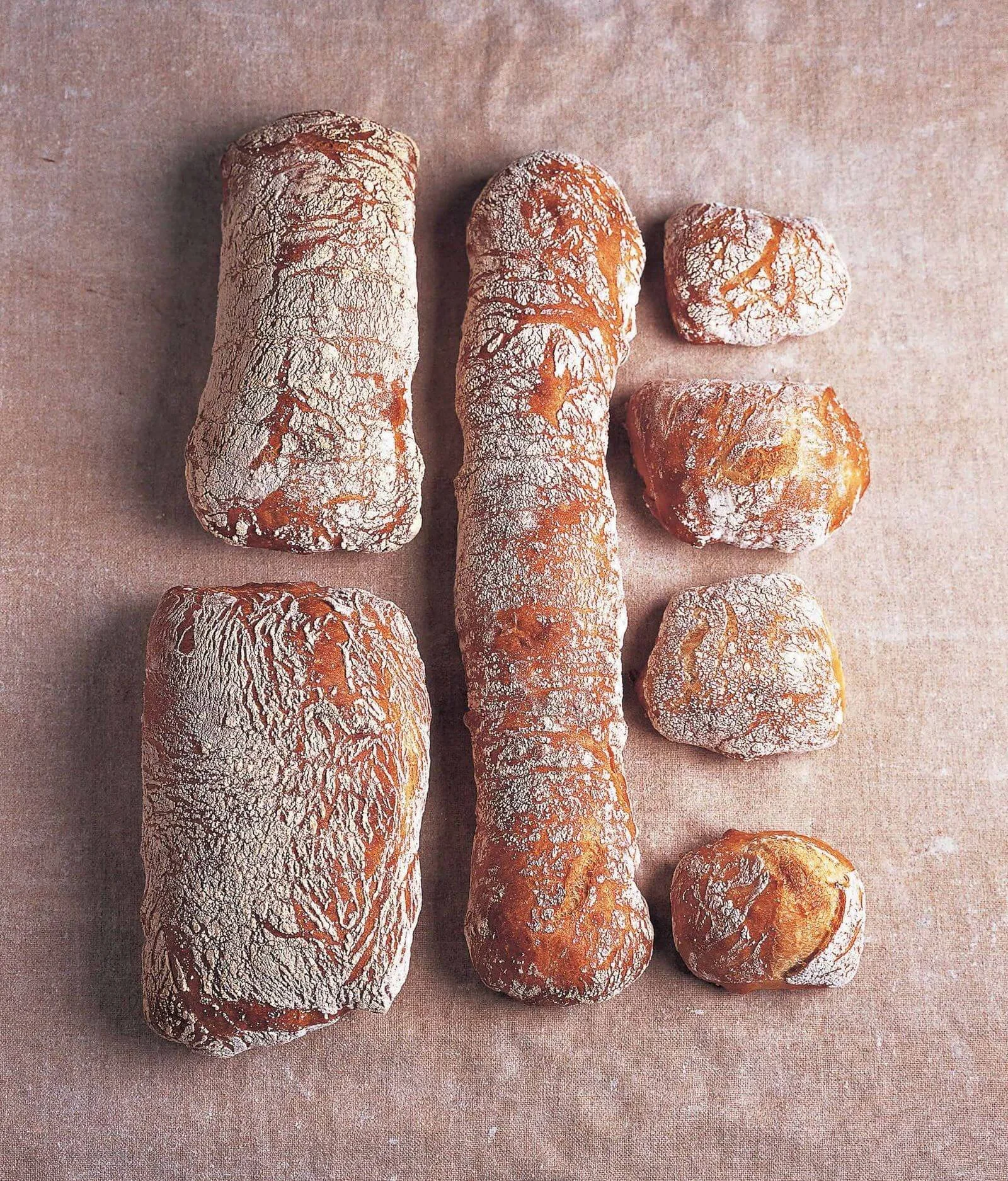
Ciabatta from Baking Artisan Bread by Ciril Hitzatta
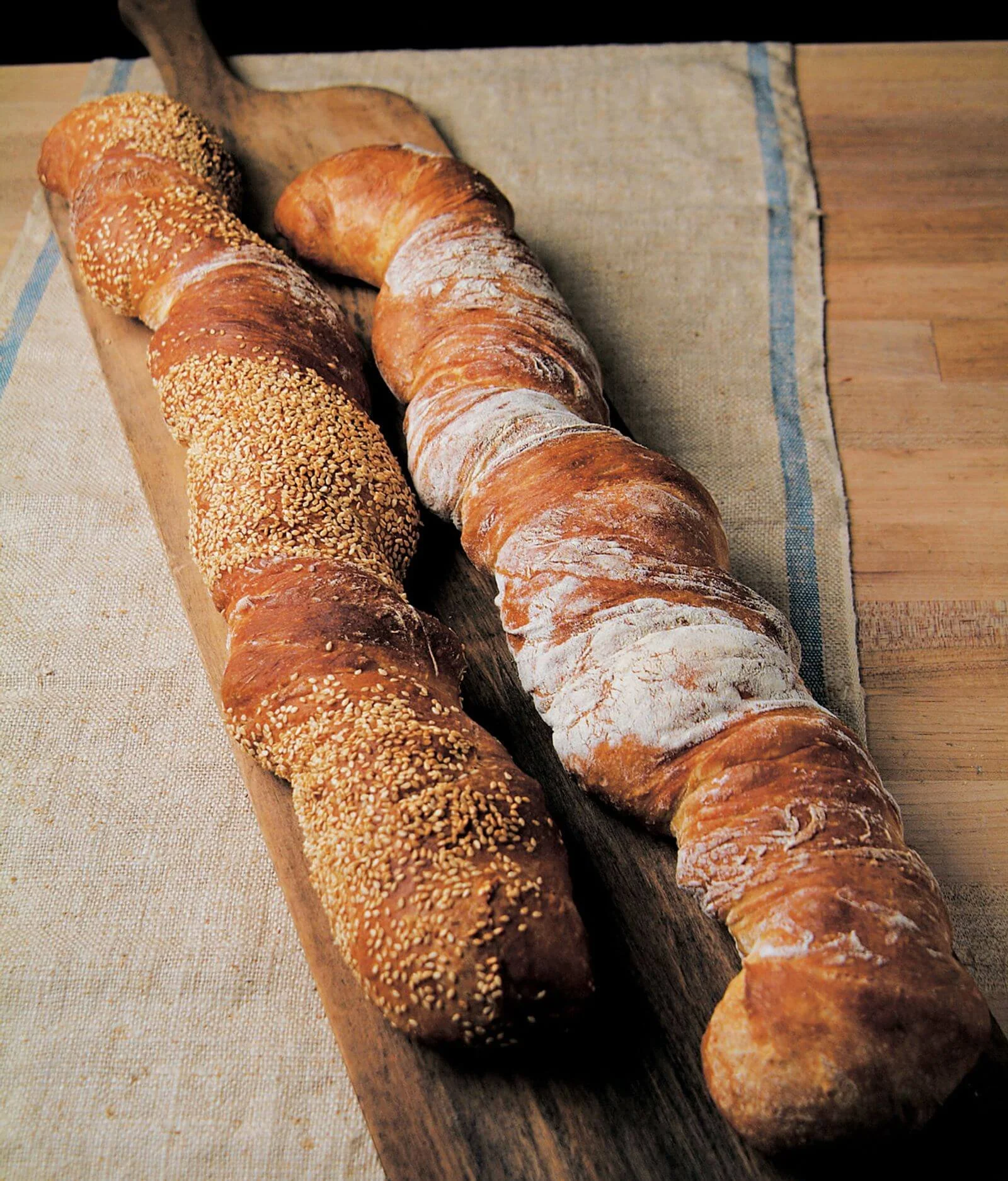
Twist Sticks from Baking Artisan Bread by Ciril Hitz
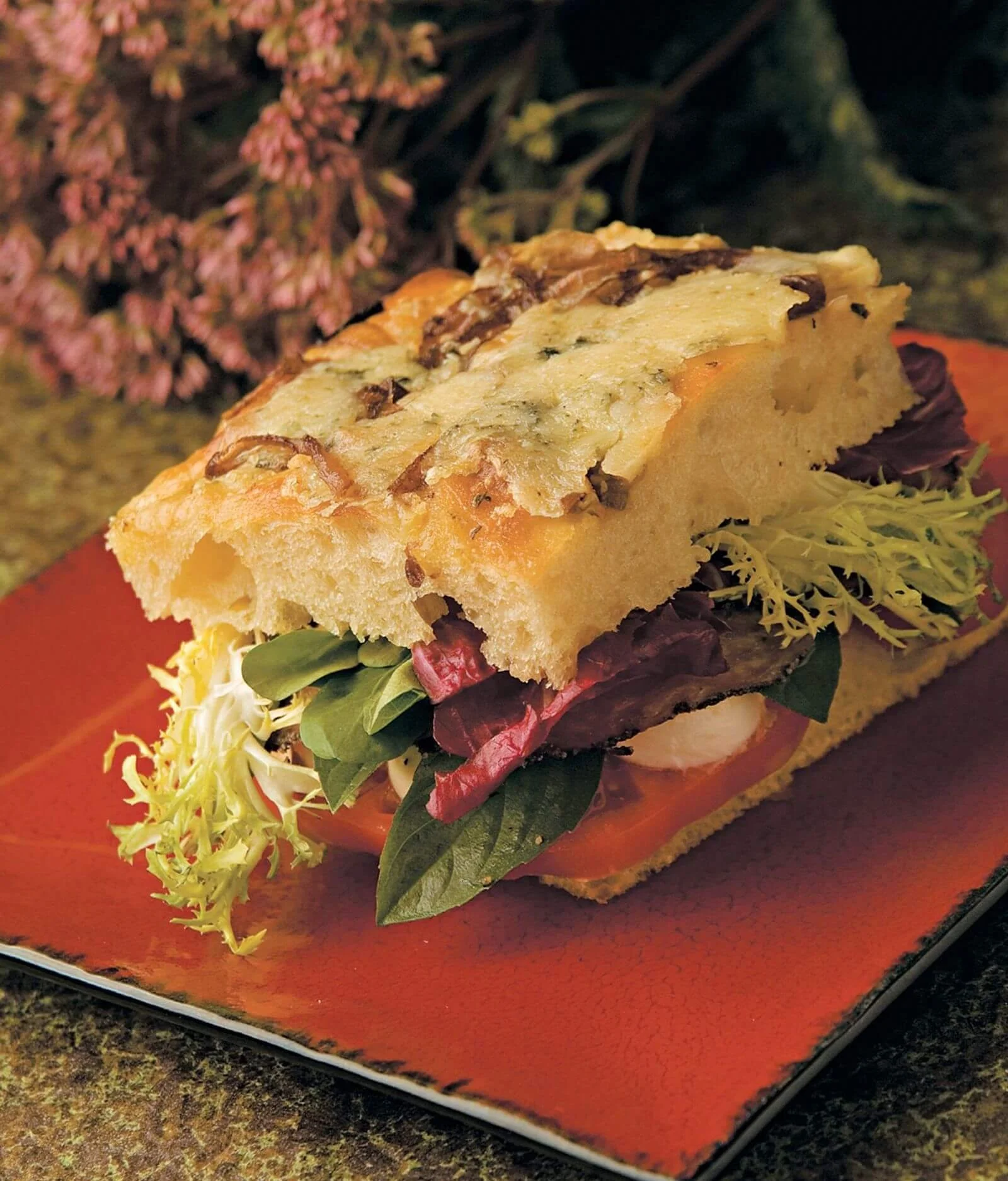
Focaccia from Baking Artisan Bread by Ciril Hitz
I also wanted to structure the formulas according to skill level. This was never intended to discourage aspiring bakers but rather to guide them toward success and prevent frustration. I truly believe that every baking experience, especially one involving long fermentation, should leave the baker with a sense of accomplishment. It makes little sense for someone completely new to baking to begin with a laminated croissant dough that requires multiple fermentation stages over several days. Instead, beginning with a whole wheat bread or a simpler ‘lean’ dough (i.e. one without enrichment with sugar or fat, such as Pane Francese) allows confidence and understanding to develop naturally.
My vision was always for readers to start with foundational formulas, master the process, and then gradually explore alternate applications and creative variations. Once the fundamentals are understood, the baker can begin introducing personal twists and discovering entirely new outcomes. That is when baking becomes truly rewarding. However, I strongly believe creativity should come after discipline. Before altering the journey, you must first trust the process, follow the formula precisely, and understand the methodology. Only after mastering the original formula should the creative process begin.
At its core, bread is beautifully simple. Flour, water, yeast, and salt. Yet through fermentation, shaping, hydration, and technique, those four ingredients can become countless products. Learn one dough properly, and you can create three to five entirely different items simply by changing a few steps. This philosophy guided not only my teaching but also my own cottage bakery operations. It simplified production, minimized excessive ingredients, and still allowed for a highly creative and diverse product line.
Equally important to me was making artisan baking approachable. I wanted to bring bread baking into the homes of aspiring bakers and demystify fermentation. Too many people viewed bread baking as intimidating or overly technical. My hope was to replace fear with confidence and to help readers realize that success comes from understanding the process rather than simply following instructions blindly.
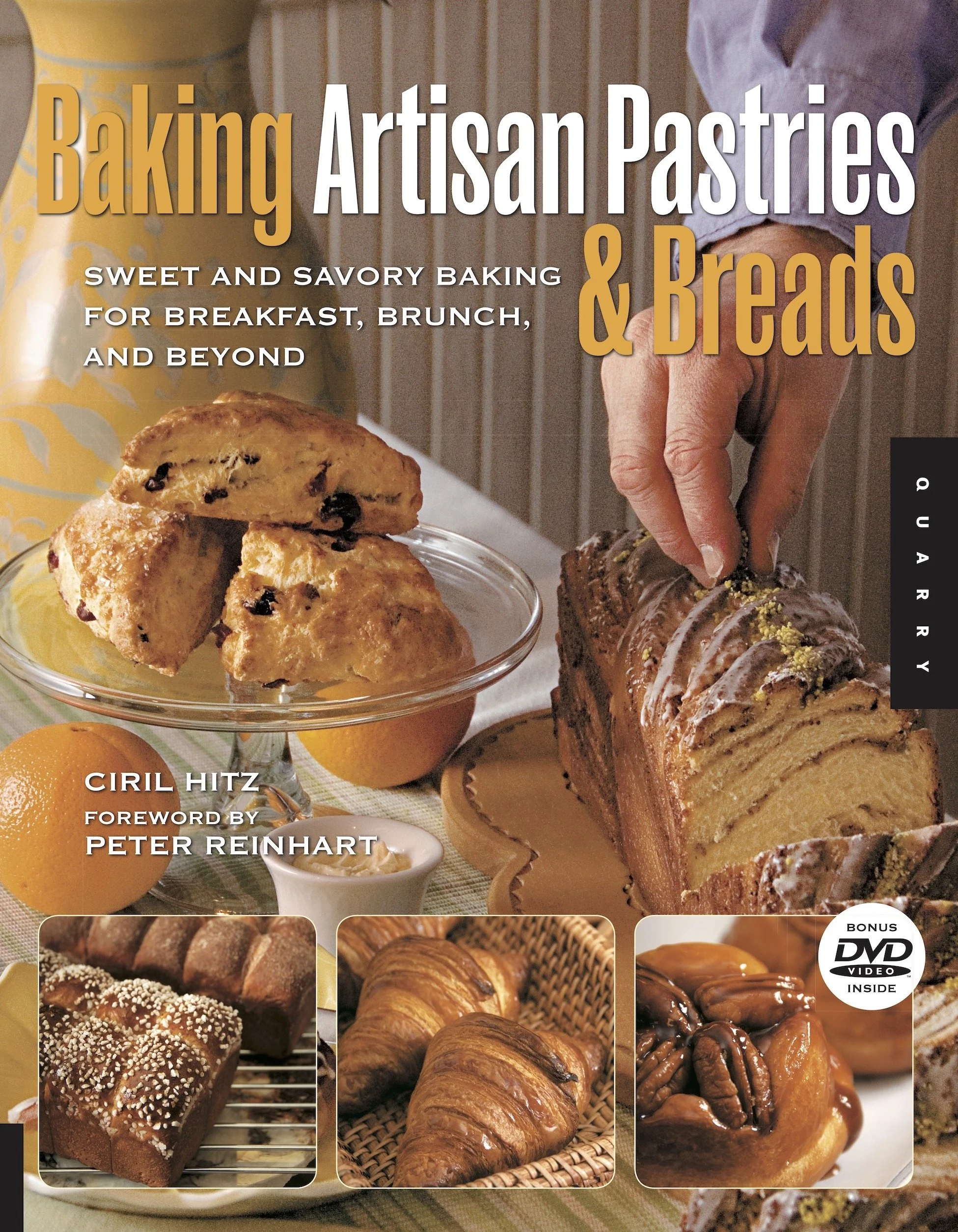
My second book, Baking Artisan Pastries and Breads, evolved naturally from the first and began roughly nine months later. This time, I shifted toward the sweeter side of baking. Rather than focusing solely on master dough formulas, the goal became helping readers achieve approachable, reliable results while understanding the fundamentals behind sweet breakfast pastries and enriched doughs.
This second book truly became a companion to the first. It offered both home bakers and professionals detailed step-by-step instruction supported by visuals designed to guide readers toward success. I explored chemically-leavened products (quick breads) as well as yeast-raised pastries, always emphasizing consistency, technique, and understanding. One of the most important additions was the troubleshooting section because I firmly believe that understanding why something failed is just as important as successfully executing a recipe.
Nowhere is this philosophy more evident than in the troubleshooting section for the laminated dough chapter. I intentionally broke apart the lamination process to visually demonstrate what happens when steps are skipped, when dough is over-proofed, under-proofed, or improperly handled. I wanted readers to see both success and failure so they could develop the ability to self-diagnose. As a teacher for more than thirty years, I know there is nothing more rewarding than watching a student evaluate their own product and identify corrective measures without relying on constant guidance. That is when true understanding develops.
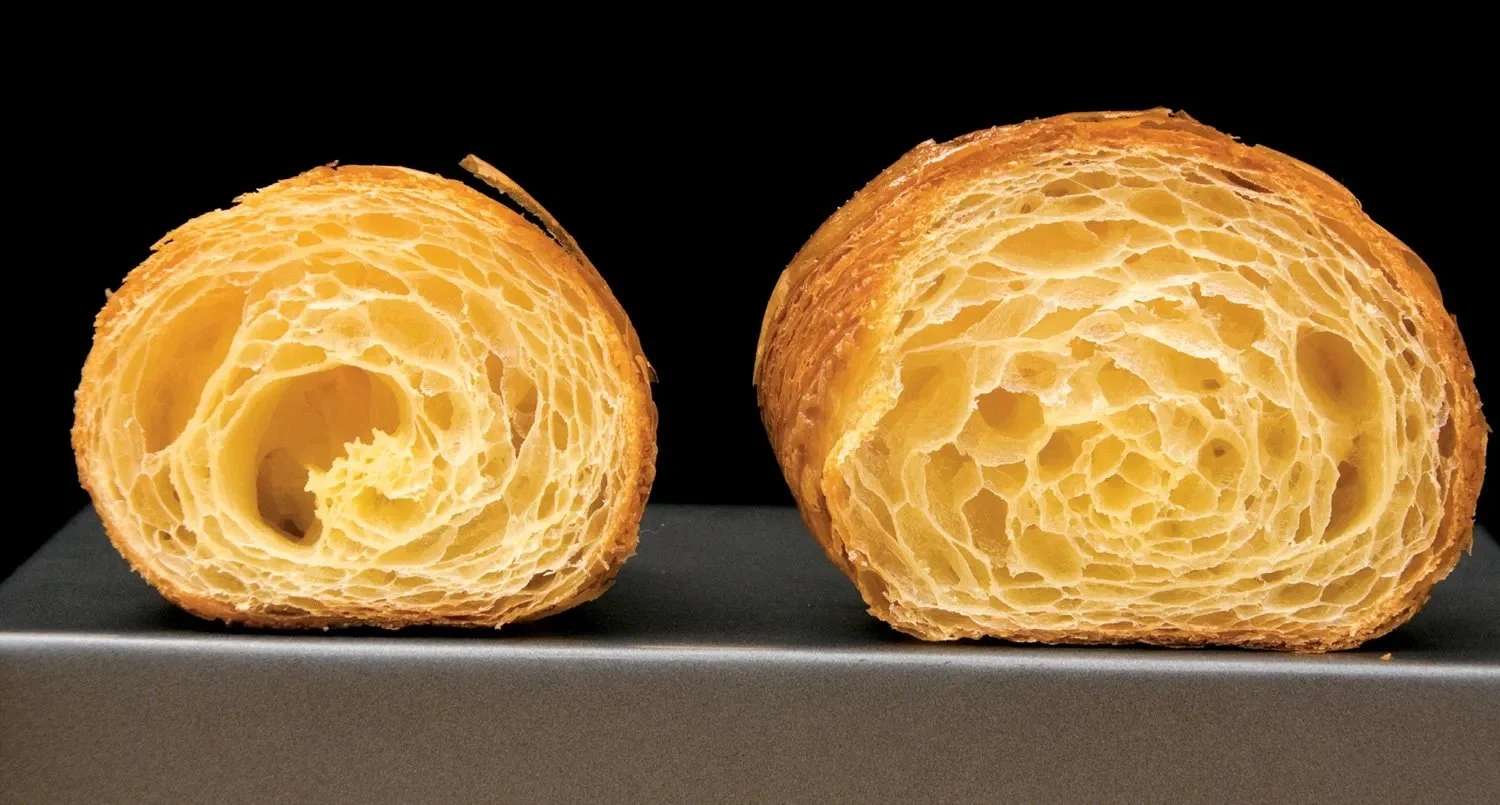
Comparison of an underproofed croissant (left) and a correctly proofed croissant (right) from Troubleshooting in Baking Artisan Pastries & Breads by Ciril Hitz
While some sections of the book are technically advanced, they are balanced by deeply personal favorites like my Swiss Carrot Cake, which has become a staple at my birthday celebrations year after year. Recipes like these remind readers that baking is not just technical—it is emotional and deeply connected to memory.
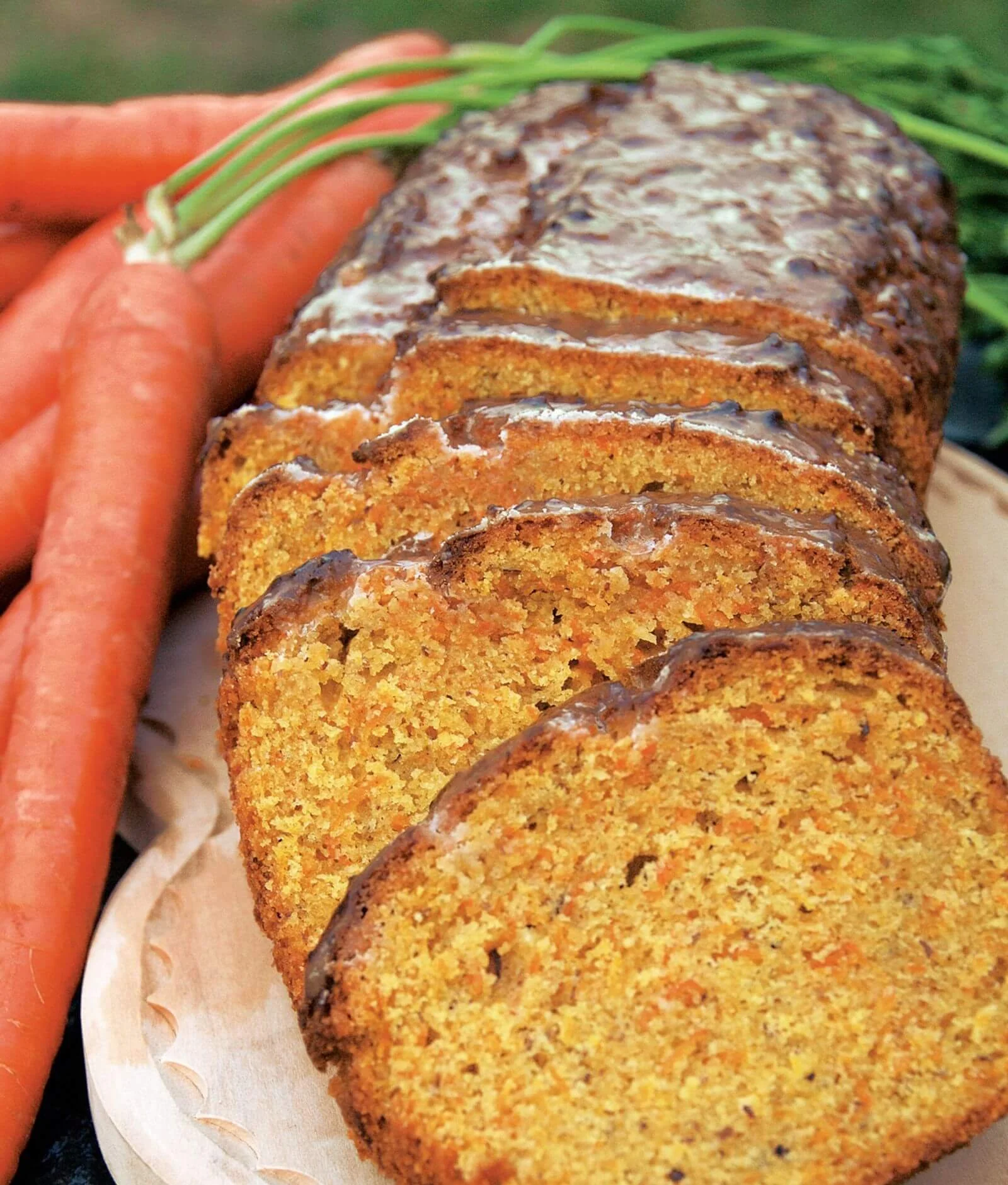
Both of my books intentionally weave personal stories into the recipes because I believe baking is ultimately about connection. Every formula has a story behind it, and those stories create emotional ties between the baker, the product, and the people gathered around the table.
Some of my most treasured memories begin in Europe. One that remains especially meaningful involves Sundays at my grandmother’s home. She would make an incredible hazelnut cake with a delicate short dough crust, a moist nut filling, layers of currant jam, and a crunchy chocolate glaze. I still remember the balance of textures and flavors the crisp chocolate, the nutty aroma, and the tartness of the jam. Yet because I was young, I never thought to document the recipe. To this day, despite all my experience, I have never been able to perfectly recreate it. That loss taught me an important lesson: always write things down. Since then, I have documented formulas obsessively to preserve both memories and experiences for future generations.
Another powerful memory came from visiting Rome as a child with my parents. I distinctly remember walking through the narrow streets and being captivated by a specific aroma, though at the time I had no idea what it was. Nearly twenty-five years later, while teaching a class and opening an oven filled with freshly baked focaccia, that exact same aroma filled the room and instantly transported me back to that childhood moment in Rome. It reminded me that baking is deeply tied to memory and emotion. Food has the power to bring stories back to life.
Perhaps one of my formulas will someday do the same for someone else, whether it is a Stollen that reminds them of family holidays or a Gibassier that transports them back to a small bakery in France. That, to me, is the true beauty of baking.
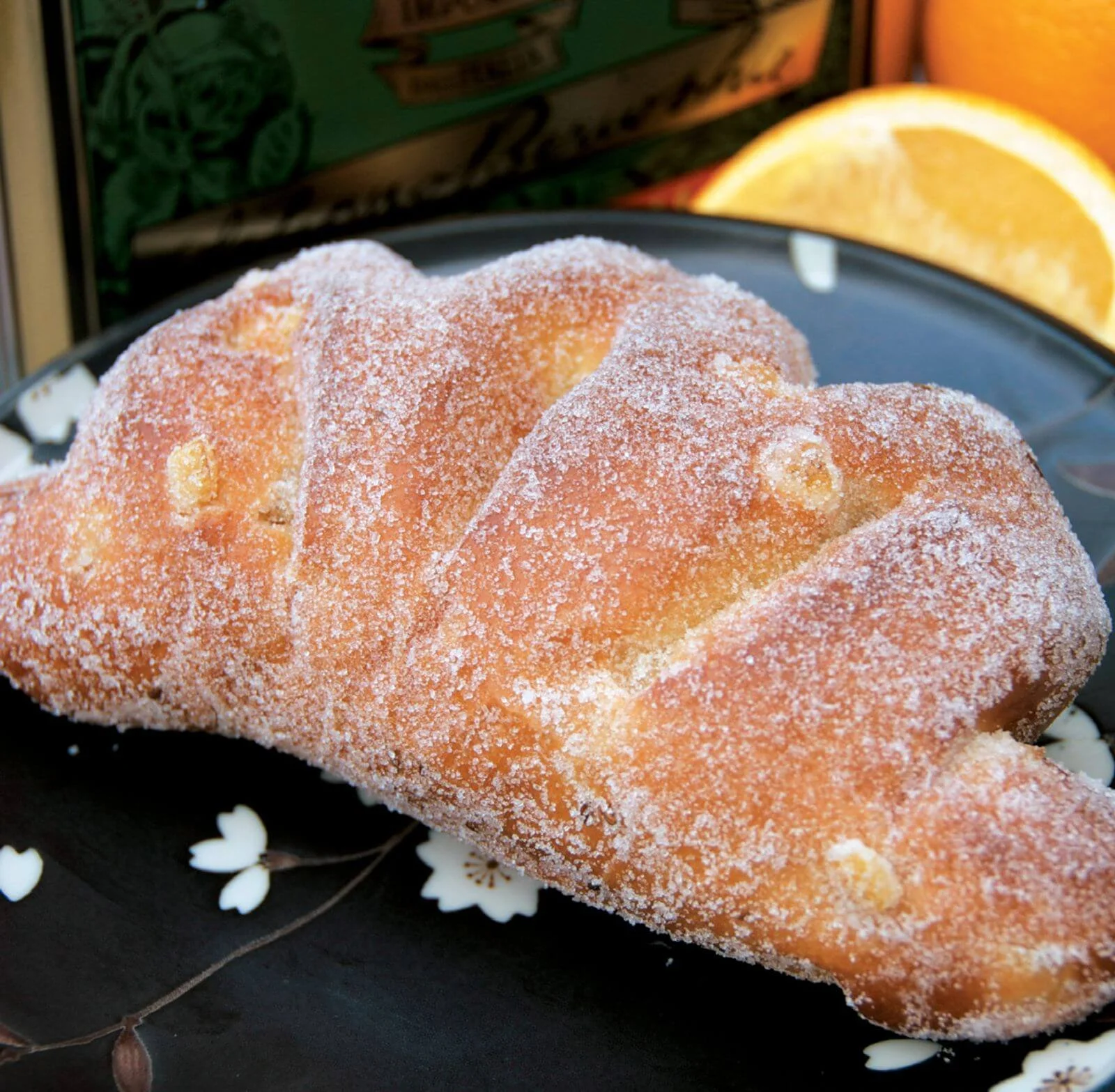
Together, these books reflect my belief that baking, while rooted in tradition, should remain approachable, adaptable, creative, and above all enjoyable.
Top recipes from Ciril Hitz’s books
About the author
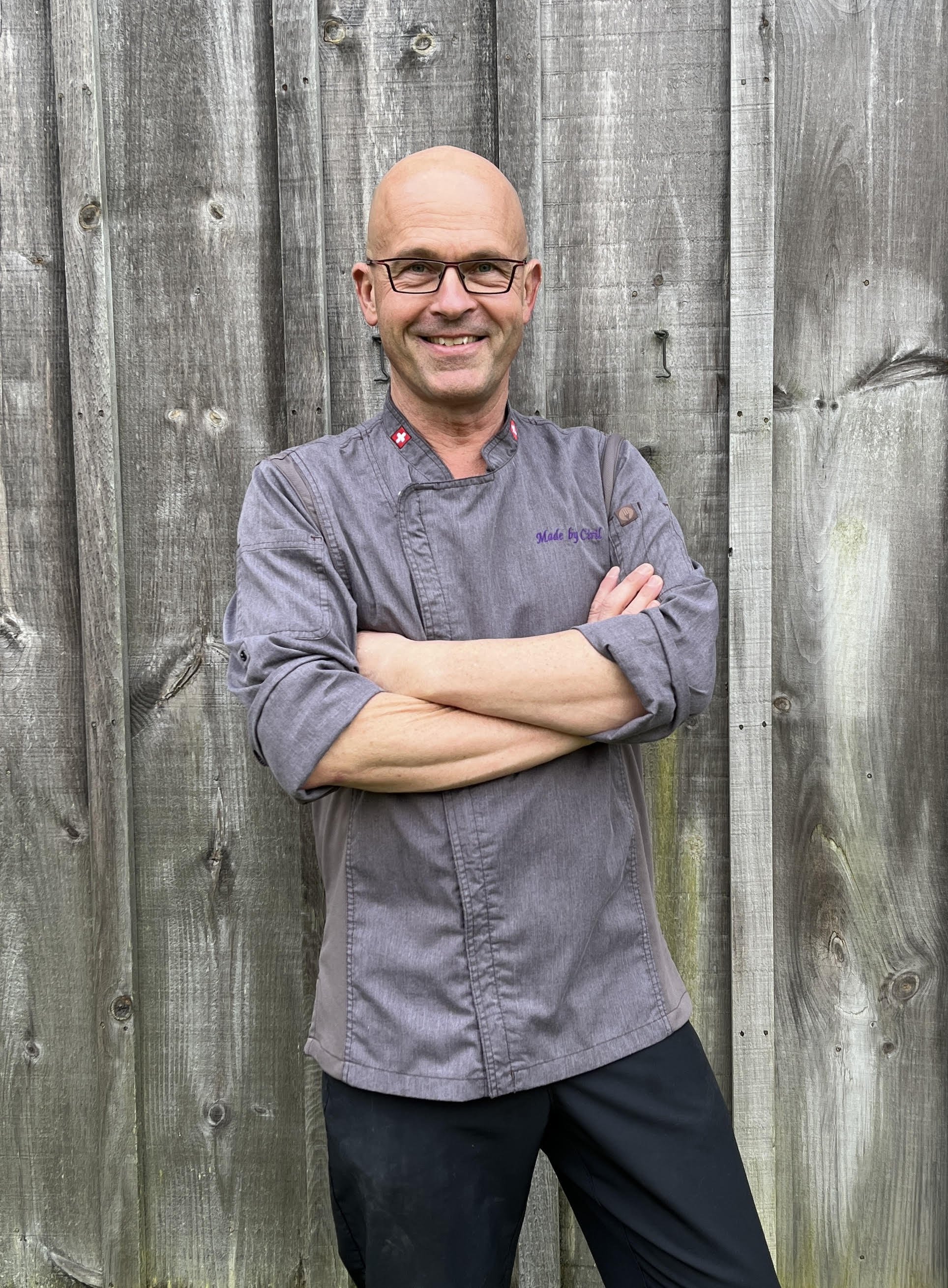
Ciril Hitz is a full-time Senior Instructor at the College of Food Innovation and Technology at Johnson & Wales University in Providence, Rhode Island and also teaches workshops at his private baking facility in Rehoboth, Massachusetts (Made by Ciril, LLC). A native of Switzerland, Ciril graduated from the Rhode Island School of Design, completed a three-year Swiss apprenticeship as a pastry chef/chocolatier, and recently received his Master of Arts in Teaching from Johnson & Wales University. He is a passionate baker, author, and educator with an international reputation and over 20 years of professional baking and pastry experience. Ciril is a guest instructor/expert at many national and international culinary events and schools and is an active member of the Bread Bakers Guild of America. He has been featured on the NBC Today Show, The Food Network, The Learning Channel, and Ciao Italia. He is the author of two books, Baking Artisan Bread and Baking Artisan Pastries and Bread, as well as numerous magazine articles, and is the producer of two DVD series, Bread Art and Better Bread. His baking philosophy embraces both the artistic and technical aspects of bread. Ciril is constantly trying to evolve both as an educator as well as an artist. Find out more at cirilhitz.com.
More features from ckbk

Look back on the recipes you’ve cooked to track your progress, and to see which dishes are due to be repeated
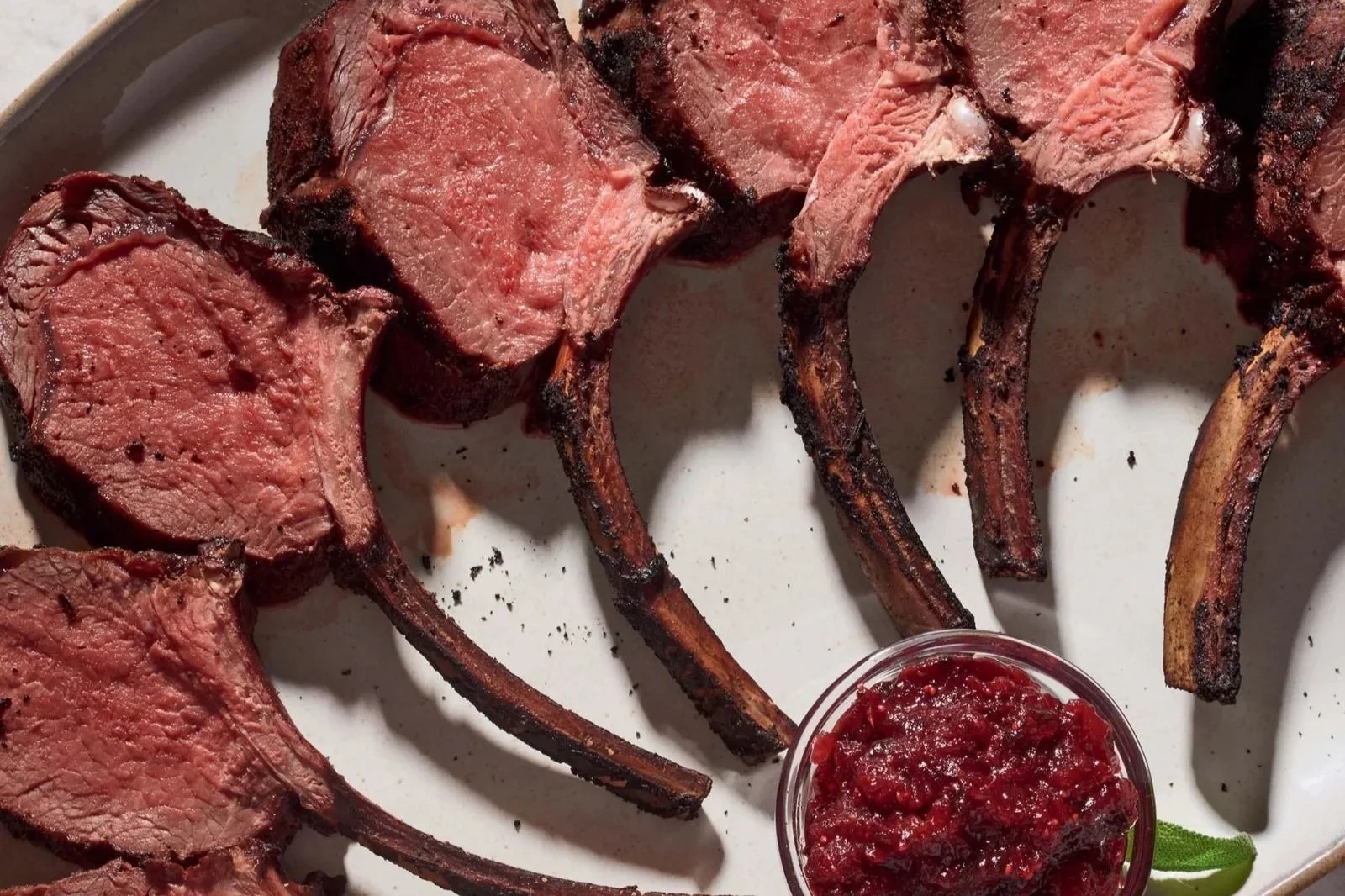
A lean, healthy and tasty option, wild venison offers everything a cook could wish for
Charlie Cart founder Carolyn Federman continues her series on cooking with junior chefs